Current EPIC Lab Members
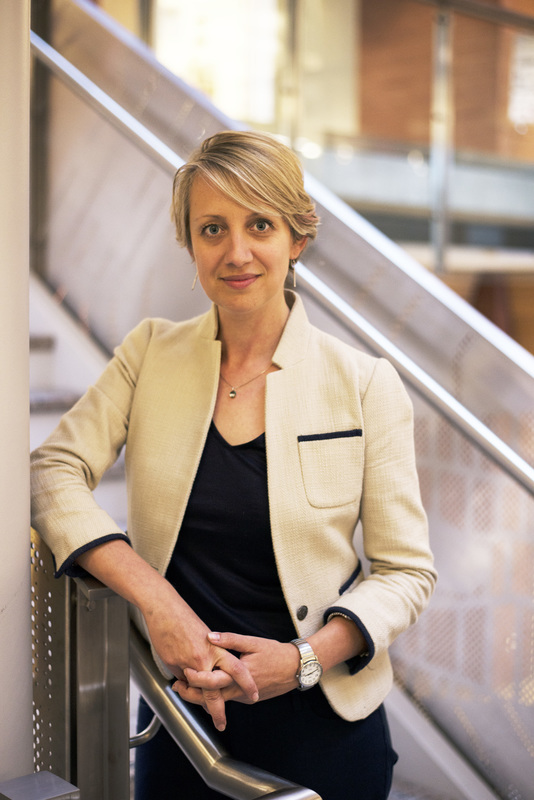 Photo: Abigail Weibel
Christy B. Till
Associate Professor
Head Magma Maker
Personal Webpage: christytill.com (see here for latest CV)
Email: [email protected]
Twitter: @this_life (on lab/science related topics)
Christy Till is a geologist who teaches classes and leads a multidisciplinary research program on the role of magma in the formation and evolution of planets known as the EPIC lab in the School of Earth and Space Exploration at Arizona State University. Her research includes determining the timescales and triggers for eruptions at active volcanoes in the US, exploring minerals and magma formation in high pressure and temperature laboratory experiments, and studying the likely compositions of magma and crusts on exoplanets. Dr. Till also has deep interests in working for justice and equity in academic science and improving science communication.
|
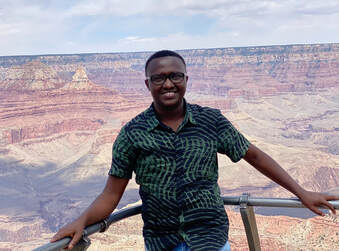
Felix Ishimwe
EPIC PhD Student (started Fall 2019) Email: [email protected] I use computer models, experiments and geochemistry to probe processes that lead to magma genesis and evolution from the mantle to the earth’s surface at subduction zones. My current research focuses on 14 million year old to present volcanism in the Colombia arc. I also have interests in applying geosciences to enhance environmental protection and sustainability. |
|
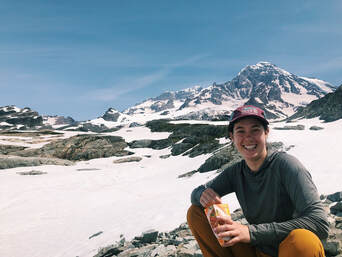
Jessie Bersson
EPIC PhD Student (started Fall 2019) Email: [email protected] I study arc volcanoes and the complex magma storage systems beneath them. I use a variety of analytical tools to investigate mechanisms of magma mobilization. I earned my BA in geology from Whitman College and have a sweet spot for the Cascades. When I'm not playing with plagioclase I love to be outside hiking, biking, and climbing. I am also passionate about community outreach and science policy. |
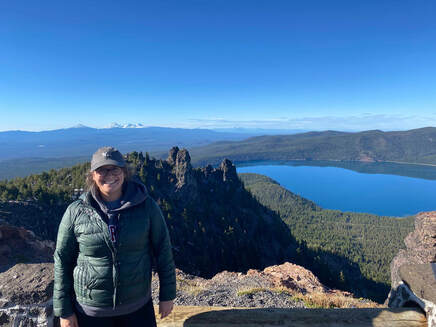
Dr. Andrea Goltz
EPIC Postdoctoral Scholar (2021-present)
Email: [email protected]
Website: http://andreagoltz.weebly.com/
Andrea is an experimental igneous petrologist and geochemist focused on volcanism at subduction zones. She received her PhD from Washington University in St. Louis in 2022. In EPIC, her research focuses on volumetric fluxes of magma from the mantle. She is approaching this topic using a combination of Monte Carlo calculations, literature compilations, and piston cylinder experiments.
EPIC Postdoctoral Scholar (2021-present)
Email: [email protected]
Website: http://andreagoltz.weebly.com/
Andrea is an experimental igneous petrologist and geochemist focused on volcanism at subduction zones. She received her PhD from Washington University in St. Louis in 2022. In EPIC, her research focuses on volumetric fluxes of magma from the mantle. She is approaching this topic using a combination of Monte Carlo calculations, literature compilations, and piston cylinder experiments.
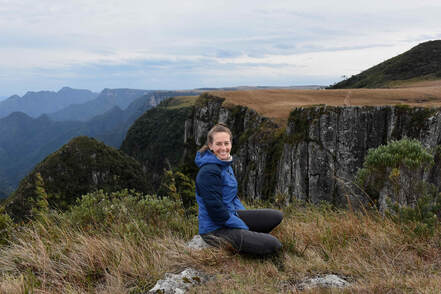
Dr. Lydia Harmon
EPIC Postdoctoral Scholar (2022-present)
Email: [email protected]
Lydia is an igneous petrologist who studies magma formation and storage. She enjoys using a combination of techniques - fieldwork, analytical lab work, and thermodynamic modeling - to understand crustal magmatic processes. Her current research with EPIC focuses on subduction-related domes in Colombia, where she interrogates the tectonic and magmatic processes that led to their eruption. Lydia completed her PhD at Vanderbilt University in 2022, where she focused on much
larger eruptions! When she's not in the lab, you can find Lydia
adventuring outside.
EPIC Postdoctoral Scholar (2022-present)
Email: [email protected]
Lydia is an igneous petrologist who studies magma formation and storage. She enjoys using a combination of techniques - fieldwork, analytical lab work, and thermodynamic modeling - to understand crustal magmatic processes. Her current research with EPIC focuses on subduction-related domes in Colombia, where she interrogates the tectonic and magmatic processes that led to their eruption. Lydia completed her PhD at Vanderbilt University in 2022, where she focused on much
larger eruptions! When she's not in the lab, you can find Lydia
adventuring outside.
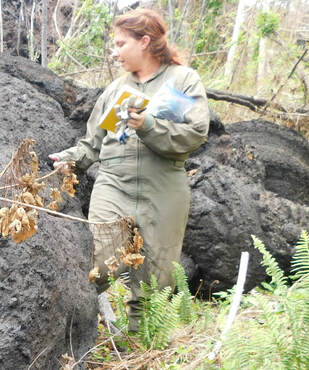
Dr. Rebecca deGraffenried
NSF Postdoctoral Fellow (2022-present)
Starting January 2024, Assistant Professor, Univ. Missouri
Email: [email protected]
Website: https://www.rldegraffenried.com/
Rebecca is a volcanologist who is interested in a variety of shallow magmatic and volcanologic processes. She received her PhD from the University of Hawai‘i at Mānoa in 2021. Primarily, she works on timescales and dynamics of pre- and syn-eruptive magma migration and ascent, using numerical modeling, experiments, and studies of natural systems. Her work in EPIC examines links between processes that initiate volcanic eruptions and ultimate eruption style.
NSF Postdoctoral Fellow (2022-present)
Starting January 2024, Assistant Professor, Univ. Missouri
Email: [email protected]
Website: https://www.rldegraffenried.com/
Rebecca is a volcanologist who is interested in a variety of shallow magmatic and volcanologic processes. She received her PhD from the University of Hawai‘i at Mānoa in 2021. Primarily, she works on timescales and dynamics of pre- and syn-eruptive magma migration and ascent, using numerical modeling, experiments, and studies of natural systems. Her work in EPIC examines links between processes that initiate volcanic eruptions and ultimate eruption style.
EPIC Alumni
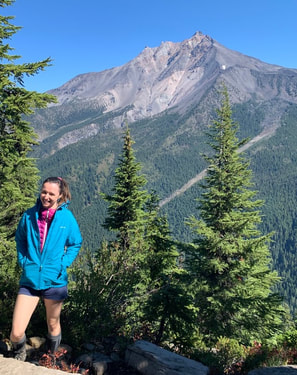
Dr. Penny Wieser
Former Postdoctoral Fellow (2021-2023)
Now Assistant Professor UC Berkeley
Email: [email protected]
Website: https://sites.google.com/view/penny-wieser
Penny did her PhD at the University of Cambridge, UK, investigating magma storage and evolution at Kīlauea Volcano, Hawai’i. She started her postdoc working jointly with Adam Kent at Oregon State University and Christy Till (ASU) in Dec 2019. Her project aims to quantify changes in magma storage conditions along the Cascades using a variety of datasets (geophysics, melt inclusions, mineral and melt barometers). She has created an open-source python3 tool for thermometry, barometry, hygrometry and chemometry. You can find more on that here.
Former Postdoctoral Fellow (2021-2023)
Now Assistant Professor UC Berkeley
Email: [email protected]
Website: https://sites.google.com/view/penny-wieser
Penny did her PhD at the University of Cambridge, UK, investigating magma storage and evolution at Kīlauea Volcano, Hawai’i. She started her postdoc working jointly with Adam Kent at Oregon State University and Christy Till (ASU) in Dec 2019. Her project aims to quantify changes in magma storage conditions along the Cascades using a variety of datasets (geophysics, melt inclusions, mineral and melt barometers). She has created an open-source python3 tool for thermometry, barometry, hygrometry and chemometry. You can find more on that here.
|
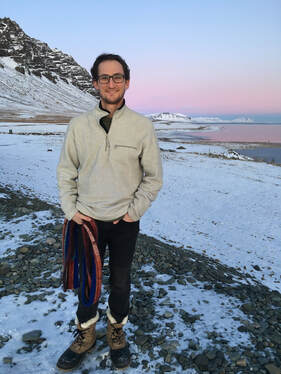
Dr. Daniel Portner
Former SESE Exploration Postdoctoral Fellow (2021-2023) Now Assistant Professor New Mexico Tech Email: [email protected] Website: www.danielportner.com Daniel is a structural seismologist specializing in teleseismic imaging in subduction zones. With EPIC he is focusing on developing new techniques to characterize the magmatic plumbing systems of arc volcanoes. Other research interests include the structure, dynamics, and deformation of slabs and their effects on the overriding plate. Daniel completed his Ph.D. down the road in Tucson at University of Arizona followed by a postdoctoral fellowship in DC at the Carnegie Institution for Science, and is now thrilled to be back in the desert! |
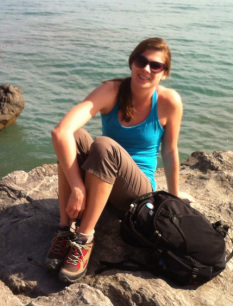
Dr. Meghan Guild
Former EPIC PhD Graduate, ASU (Fall 2014 - Spring 2020)
Now Research Scientist ASU SIMS Lab
Website: meghanguild.weebly.com
Meghan's Google Scholar Page
Meghan uses experiments, natural samples and thermodynamic tools to investigate the role of fluids and melts in subduction zones. While in EPIC, her research focused on investigating the origins of arc magmas and high-pressure hydrous minerals as revealed by the Higashi-Akaishi Peridotite in Japan, and the chemistry of subduction zone fluids.
You can read a nice profile on Meghan, Hannah and Kara when they graduated from ASU here: https://asunow.asu.edu/20200428-‘epic’-team-scientists-graduates-asu
Former EPIC PhD Graduate, ASU (Fall 2014 - Spring 2020)
Now Research Scientist ASU SIMS Lab
Website: meghanguild.weebly.com
Meghan's Google Scholar Page
Meghan uses experiments, natural samples and thermodynamic tools to investigate the role of fluids and melts in subduction zones. While in EPIC, her research focused on investigating the origins of arc magmas and high-pressure hydrous minerals as revealed by the Higashi-Akaishi Peridotite in Japan, and the chemistry of subduction zone fluids.
You can read a nice profile on Meghan, Hannah and Kara when they graduated from ASU here: https://asunow.asu.edu/20200428-‘epic’-team-scientists-graduates-asu
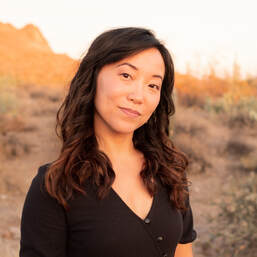
Dr. Karalee Brugman
EPIC PhD Graduate, ASU ( Fall 2014 - Spring 2020)
NSF Graduate Fellow (2015-2018)
Now Research Scientist ASU Facility for Open Research in a Compressed Environment (FORCE)
Website: karabrugman.com
Kara's Google Scholar Page
Kara is interested in magma genesis and volatile solubility on exoplanets, Earth, and solar system bodies, the timescales of events in magmatic systems, geothermometry, volcano science and hazards, high-silica magmatic systems, and how our planet's volcanologic and petrologic mechanisms can be used to understand those on other planets and moons. In EPIC, her research focused on experimental determination of exoplanetary melting behavior, developing a new clinopyroxene-liquid geothermometer for silicic magmatic systems and better understanding magmatic history leading up to effusive eruptions at Yellowstone caldera.
EPIC PhD Graduate, ASU ( Fall 2014 - Spring 2020)
NSF Graduate Fellow (2015-2018)
Now Research Scientist ASU Facility for Open Research in a Compressed Environment (FORCE)
Website: karabrugman.com
Kara's Google Scholar Page
Kara is interested in magma genesis and volatile solubility on exoplanets, Earth, and solar system bodies, the timescales of events in magmatic systems, geothermometry, volcano science and hazards, high-silica magmatic systems, and how our planet's volcanologic and petrologic mechanisms can be used to understand those on other planets and moons. In EPIC, her research focused on experimental determination of exoplanetary melting behavior, developing a new clinopyroxene-liquid geothermometer for silicic magmatic systems and better understanding magmatic history leading up to effusive eruptions at Yellowstone caldera.
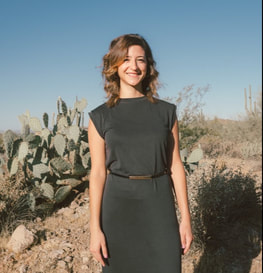
Dr. Hannah Shamloo
EPIC PhD Graduate, ASU ( Fall 2015 - Spring 2020)
Now Assistant Professor, Central Washington University
Website: www.hannahshamloo.com
Hannah's Google Scholar Page
Hannah uses petrology, geochemistry, diffusion chronometry, experimental petrology, thermodynamic modeling, and statistical modeling to better understand the processes and timescales associated with volcanic eruptions. In EPIC her research focused on understanding what initiated Yellowstone's Lava Creek Tuff super-eruption (ca. 631 ka), experimentally determining rates of Mg diffusion in K-feldspar and better understanding average repose times at active volcanoes in the Cascades arc.
EPIC PhD Graduate, ASU ( Fall 2015 - Spring 2020)
Now Assistant Professor, Central Washington University
Website: www.hannahshamloo.com
Hannah's Google Scholar Page
Hannah uses petrology, geochemistry, diffusion chronometry, experimental petrology, thermodynamic modeling, and statistical modeling to better understand the processes and timescales associated with volcanic eruptions. In EPIC her research focused on understanding what initiated Yellowstone's Lava Creek Tuff super-eruption (ca. 631 ka), experimentally determining rates of Mg diffusion in K-feldspar and better understanding average repose times at active volcanoes in the Cascades arc.
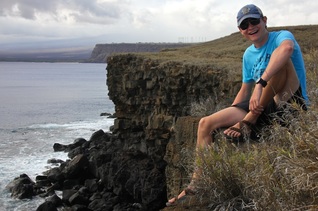
Mitchell Phillips
EPIC MS Graduate, ASU (Fall 2017-Fall 2019) & Former EPIC Undergraduate Researcher
Now Geology Editor, US Geological Survey, Menlo Park
Mitch's LinkedIn page
Mitch did his BS and MS in Geological Sciences at ASU, where his research in EPIC focused on using experimental techniques to determine the mineralogy we might find in exoplanet mantles and crusts and using diffusion chronometry to look at the magma mixing processes recorded in Cascades arc magmas.
EPIC MS Graduate, ASU (Fall 2017-Fall 2019) & Former EPIC Undergraduate Researcher
Now Geology Editor, US Geological Survey, Menlo Park
Mitch's LinkedIn page
Mitch did his BS and MS in Geological Sciences at ASU, where his research in EPIC focused on using experimental techniques to determine the mineralogy we might find in exoplanet mantles and crusts and using diffusion chronometry to look at the magma mixing processes recorded in Cascades arc magmas.
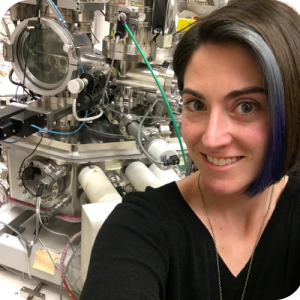
Dr. Kayla Iacovino
2016-2018 SESE Postdoctoral Fellow
Now Experimental Lab Scientist NASA JSC/Jacobs
Website: kaylaiacovino.com
Kayla's Google Scholar Page
Kayla uses a combination of fieldwork, laboratory experiments, and thermodynamic modeling to study volcanic plumbing systems. She is particularly interested in answering questions about how volcanic volatiles (H2O, CO2, S, F, Cl) cycle within the Earth and other planets and how a combination of magma crystallization, degassing, and chemical evolution leads from magma genesis to volcanic eruption.
2016-2018 SESE Postdoctoral Fellow
Now Experimental Lab Scientist NASA JSC/Jacobs
Website: kaylaiacovino.com
Kayla's Google Scholar Page
Kayla uses a combination of fieldwork, laboratory experiments, and thermodynamic modeling to study volcanic plumbing systems. She is particularly interested in answering questions about how volcanic volatiles (H2O, CO2, S, F, Cl) cycle within the Earth and other planets and how a combination of magma crystallization, degassing, and chemical evolution leads from magma genesis to volcanic eruption.
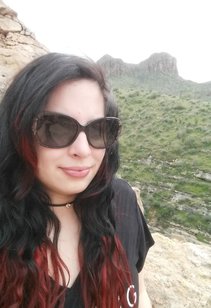
Alexandra Milne
SESE MS Graduate, Co-Advised by Prof. S. Desch (Fall 2016-2018)
Now at ARES Lunar Sample Processor, NASA JSC
Alexandra's LinkedIn Page
Alexandra earned her B.Sc in Geology at Texas Tech University followed by MS in SESE, and loves meteorites! Her interests include chondrule formation and understanding the energetic event(s) going on in the early Solar System and her research in EPIC focused on vertical furnace experiments to reproduce chondritic textures in an effort to find out how chondrules formed based on proposed astrophysical models, specifically, the planetary embryo bow shock model.
SESE MS Graduate, Co-Advised by Prof. S. Desch (Fall 2016-2018)
Now at ARES Lunar Sample Processor, NASA JSC
Alexandra's LinkedIn Page
Alexandra earned her B.Sc in Geology at Texas Tech University followed by MS in SESE, and loves meteorites! Her interests include chondrule formation and understanding the energetic event(s) going on in the early Solar System and her research in EPIC focused on vertical furnace experiments to reproduce chondritic textures in an effort to find out how chondrules formed based on proposed astrophysical models, specifically, the planetary embryo bow shock model.
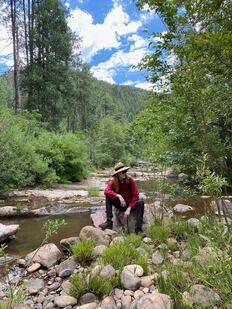
Jax Webb
EPIC Undergraduate Researcher Spring 2019-Spring 2021
Email: [email protected]
Jax worked in the EPIC lab creating many of the parts used for the experiments in order to help learn more about exoplanets and on querying characteristics of past dome-forming eruptions in an effort to improve eruption forecasting tools.
EPIC Undergraduate Researcher Spring 2019-Spring 2021
Email: [email protected]
Jax worked in the EPIC lab creating many of the parts used for the experiments in order to help learn more about exoplanets and on querying characteristics of past dome-forming eruptions in an effort to improve eruption forecasting tools.
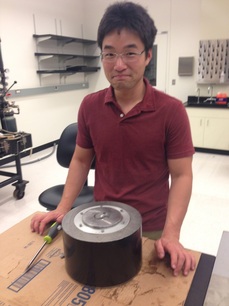
Michael Huh
2014-2016 EPIC Laboratory Manager
Now Postdoc, Pacific Northwest National Laboratory
Email: [email protected]
Having trained as an experimental petrologist at UCLA under Craig Manning, Mike worked at EPIC for two years to help construct the new experimental lab, including refurbishing two Kennedy-style piston cylinders and a 1 atm gas mixing apparatus, as well setting up a new Boyd-England style piston cylinder and all ancillary equipment. Following his work in EPIC, Mike completed a PhD at UC Davis and is now a postdoc at Pacific NW National Lab.
2014-2016 EPIC Laboratory Manager
Now Postdoc, Pacific Northwest National Laboratory
Email: [email protected]
Having trained as an experimental petrologist at UCLA under Craig Manning, Mike worked at EPIC for two years to help construct the new experimental lab, including refurbishing two Kennedy-style piston cylinders and a 1 atm gas mixing apparatus, as well setting up a new Boyd-England style piston cylinder and all ancillary equipment. Following his work in EPIC, Mike completed a PhD at UC Davis and is now a postdoc at Pacific NW National Lab.
Jamie Shaffer,
MS, New Mexico State University
2015-2016 EPIC Research Technician
Now Geoscientist Supervisor, New Mexico Environment Department
Jamie's LinkedIn Page
Jamie spent a year and half helping hand in the lab and conducting his own research in EPIC. His research is focused on thermometry of FeTi oxides and feldsparsintegrated with rhyolite-MELTS modeling on Yellowstone rhyolite lava flows. Jamie has also spent time in the field, mapping areas in the Transition Zone around Northeastern Arizona and at Yellowstone National Park.
MS, New Mexico State University
2015-2016 EPIC Research Technician
Now Geoscientist Supervisor, New Mexico Environment Department
Jamie's LinkedIn Page
Jamie spent a year and half helping hand in the lab and conducting his own research in EPIC. His research is focused on thermometry of FeTi oxides and feldsparsintegrated with rhyolite-MELTS modeling on Yellowstone rhyolite lava flows. Jamie has also spent time in the field, mapping areas in the Transition Zone around Northeastern Arizona and at Yellowstone National Park.
Eric Escoto
Now SESE PhD student & NSF Graduate Fellow, ASU (E. Vivoni Advisor)
2015-2016 EPIC Undergraduate Researcher
2015 Ron Greeley Planetary Scholarship Recipient
Email: [email protected]
Prior to working with EPIC, Eric had a background in over nine years in the civil/geotechnical engineering field as a soils and materials testing technician and soils laboratory manager. In addition to working as a laboratory assistant at EPIC, he worked on the timescales of magmatic processes in Hawaii at both Mauna Loa and Kilauea by analyzing intracrystalline elemental diffusion, prior to beginning a PhD in SESE.
Now SESE PhD student & NSF Graduate Fellow, ASU (E. Vivoni Advisor)
2015-2016 EPIC Undergraduate Researcher
2015 Ron Greeley Planetary Scholarship Recipient
Email: [email protected]
Prior to working with EPIC, Eric had a background in over nine years in the civil/geotechnical engineering field as a soils and materials testing technician and soils laboratory manager. In addition to working as a laboratory assistant at EPIC, he worked on the timescales of magmatic processes in Hawaii at both Mauna Loa and Kilauea by analyzing intracrystalline elemental diffusion, prior to beginning a PhD in SESE.
Dr. Sarah B. Cichy
2014-2016 SESE Exploration Postdoctoral Fellow
Now Senior Research Scientist - University of Potsdam, Germany
Email: [email protected]
Sarah joined us at SESE for two busy years as a SESE Exploration Postdoc working on Li diffusion experiments in rhyolitic melts. Her main research interests focus on petrological and geochemical insights into magmatic processes and dynamics related to volcanic eruptions through chemical and textural analyses, applying up-to-date experimental and analytical methods and instruments. Sarah's now a Senior Research Scientist at University of Potsdam, where amongst other responsibility she is in charge of their Internally Heated Pressure Vessel (IHPV) laboratory.
2014-2016 SESE Exploration Postdoctoral Fellow
Now Senior Research Scientist - University of Potsdam, Germany
Email: [email protected]
Sarah joined us at SESE for two busy years as a SESE Exploration Postdoc working on Li diffusion experiments in rhyolitic melts. Her main research interests focus on petrological and geochemical insights into magmatic processes and dynamics related to volcanic eruptions through chemical and textural analyses, applying up-to-date experimental and analytical methods and instruments. Sarah's now a Senior Research Scientist at University of Potsdam, where amongst other responsibility she is in charge of their Internally Heated Pressure Vessel (IHPV) laboratory.
Katherine Sheppard,
2014-2015 EPIC Ugrad Thesis Student
Now Data Analyst, Raytheon, Tucson, AZ
Katherine was an undergraduate student in the Barrett Honors College and SESE who completed an honors thesis on the origin of primitive basalts from Lassen Volcanic Field in EPIC in Spring 2015.
Katherine was a recipient of the 2015 CLAS Dean's Medal based on her coursework and undergraduate research.
You can read a nice profile on Katherine by ASU's College of Liberal Arts & Sciences here: https://asunews.asu.edu/20150428-sheppard-earth-space-student
2014-2015 EPIC Ugrad Thesis Student
Now Data Analyst, Raytheon, Tucson, AZ
Katherine was an undergraduate student in the Barrett Honors College and SESE who completed an honors thesis on the origin of primitive basalts from Lassen Volcanic Field in EPIC in Spring 2015.
Katherine was a recipient of the 2015 CLAS Dean's Medal based on her coursework and undergraduate research.
You can read a nice profile on Katherine by ASU's College of Liberal Arts & Sciences here: https://asunews.asu.edu/20150428-sheppard-earth-space-student
